
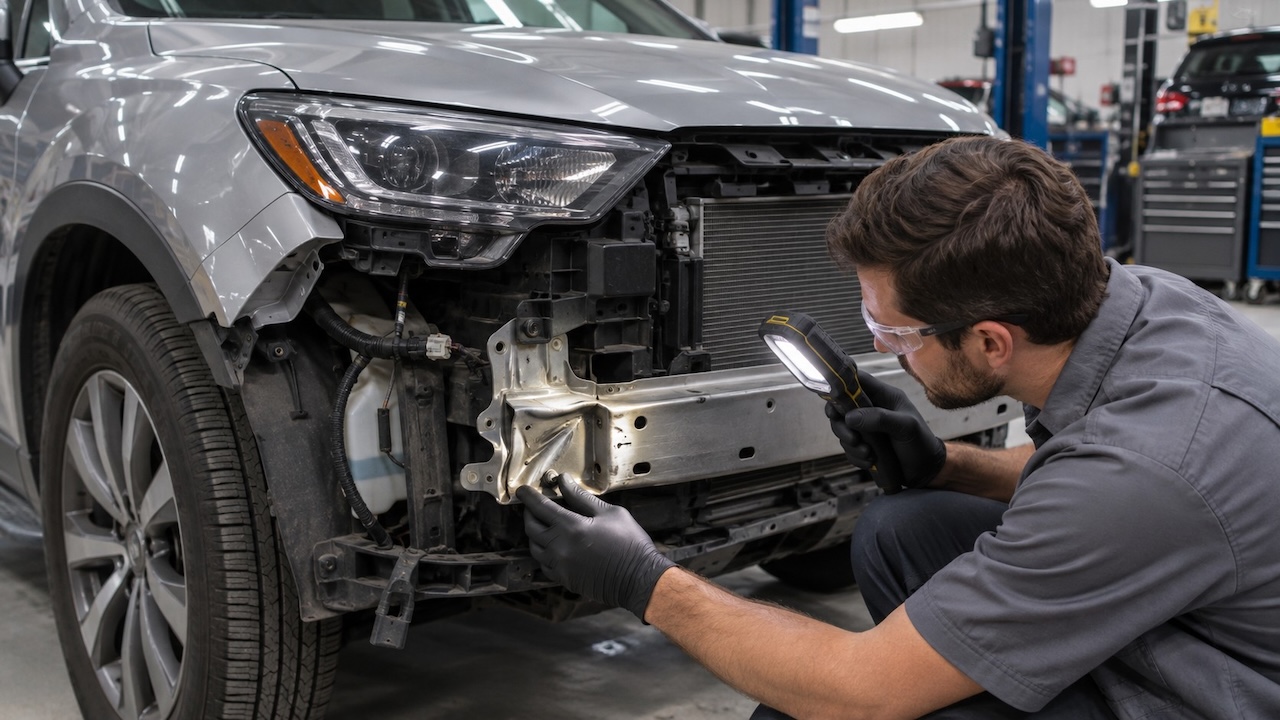
After a collision, the first thing most drivers check is the paint and body panels, and a small dent or scratch can look like the whole story. Modern vehicles are built with energy-absorbing structure, sensors, and safety systems behind the panels, so a hit that looks minor on the outside can reach well past the surface. Paulding Collision Center in Dallas, GA inspects collision damage for Paulding County drivers, and knowing what can hide under the surface helps you decide what to do next.
Why Damage Hides Behind the Surface
A bumper cover is mostly a skin. Behind it sit energy absorbers, a reinforcement bar, brackets, wiring, and often sensors for parking and driver assistance features. A low-speed impact can crush an absorber or shift a bracket without leaving much of a mark on the cover, so bumper repair starts with finding out what the cover is hiding. When damaged parts need to be replaced, genuine auto parts help restore fit and function.
Structural and Frame Damage
A vehicle's structure is designed to channel crash forces around the cabin, and it has to be repaired to the manufacturer's specifications to work as designed in the next collision. Signs of a problem include uneven gaps between panels, a hood or trunk that does not line up, doors that rub or close harder than before, and handling that feels different. Measuring the structure against factory specifications is how a shop finds out whether it moved.
Sensors, Cameras, and Driver Assistance Features
Many newer vehicles use cameras and radar for features such as parking sensors, blind spot monitoring, and automatic braking. Even a minor bump can shift one of those sensors slightly, and a sensor that is off can cause warnings or features that do not respond the way they should. Calibration requirements vary by vehicle and repair, so ask the shop how your vehicle's systems will be checked after the work. Auto glass repair can also involve cameras mounted on the windshield.
| What You Notice | What May Be Hiding | Suggested Next Step |
|---|---|---|
| Uneven gaps between panels | Structural or mounting damage | Have the structure measured |
| Pulling to one side or uneven tire wear | Suspension or alignment damage | Have suspension and alignment inspected |
| Warning lights or features that act up | Sensor, wiring, or module damage | Ask for a scan and a sensor check |
| Rattles, new noises, or loose trim | Cracked mounts or broken clips | Have the area inspected |
| A hood, trunk, or door that does not close right | Panel or hinge misalignment | Have the fit checked |
| Fluid under the vehicle after a hit | A damaged radiator, hose, or line | Stop driving and have it checked promptly |
Think Your Vehicle May Have Hidden Damage?
Schedule an inspection and let the team take a look before small problems turn into bigger ones.
Suspension, Wheels, and Tires
A curb strike or a hard hit can bend suspension parts, damage a wheel, or knock the alignment out without changing how the vehicle looks parked. Watch for pulling, vibration, a steering wheel that sits off center, and tires wearing on one edge. These are safety concerns, so do not wait for the symptom to get worse. Deer strikes on rural roads around Paulding County, especially at dawn and dusk, can do similar damage to the radiator, grille mounts, and sensors behind the front bumper, and drivers in Dallas, Hiram, Acworth, and Powder Springs face both commuter traffic and rural roads.
What to Do After an Accident
Make sure everyone is safe, document the scene and the damage with photos, and exchange information. Do not assume the vehicle is fine because it still drives. The repair estimate comes after an inspection, which is when hidden damage is found and added to the repair plan. Repair plans can change once panels come off, so a shop that explains what it finds keeps you informed.
The damage you can see after a collision is often only part of the story. Structure, sensors, supports, and suspension can all be affected without obvious signs, and an inspection is the way to find out what your vehicle really needs.
Collision Inspection in Dallas, GA
Paulding Collision Center serves drivers in Dallas, Hiram, Acworth, Powder Springs, and across Paulding County, and the team can look over your vehicle after any collision, big or small. The shop handles collision repair, and you can find the shop through Our Location before you stop by.